

Sunday Summary – 4th November 2018
Good evening ladies and gents! It’s time for another Sunday Summary post, in which I reflect on a very busy week!
This will be my fourth post of the week; normally I don’t schedule in so many posts, but a couple of reviews and a new reading list for the month were all due at the same time. It has been fun, although I can practically see steam coming off my hands from typing so much!
On Monday I posted my review of The Hidden Face by S. C. Flynn. The author kindly offered me a copy of the book in exchange for review; it’s been the first direct request I have had for a little while, so it made a refreshing change to read.
Then, on Wednesday I shared my (very short) TBR for the month. It’s not that I am not planning on reading this month… don’t be silly. That would be like telling me not to breathe! This month, I decided to give myself a little more freedom in the books I read as opposed to a full, set list.
Friday was my stop on the Blog Tour for Another Kind of Magic, the third and final book of the Caitlin series by Elizabeth Davies. As an avid reader of historical fiction and a great lover of magic, this series was a treat for me. If you haven’t read any of these books, please go and read my reviews… or better yet, give them a try! If you do, I hope you enjoy them as much as I did.
Books Read


Following on from last week’s Sunday Summary post, I began the week by finishing reading The Swan Keeper by Milana Marsenich. I reviewed Copper Sky, another of Milana’s books back in March this year. After doing so, Milana kindly asked if I would accept a copy of The Swan Keeper to read and review at a later date. Naturally, I accepted. I really enjoyed both the plot and the characters.
Also featuring today (and in my Sunday Summary post last week) is Season of Storms by Andrzej Sapkowski. I confess though I have read less of this book than last week. I have made some progress here, so I include it, but not a lot. The majority of my time has been spent on another book this week.
A Game of Thrones – how I love this series! I have already read this book twice over, but it really doesn’t matter. It’s the kind of treasure you could never get bored of. A Game of Thrones is one of two books I have set myself the task of reading this month; considering its size and the fact that I only started reading this on Thursday, I’m impressed that I’m already 25% through. I can, and have, literally sat with this book for hours. I look forward to many more!
There is something else. The desperate urge to include a GoT pun in this post is overwhelming. I apologise in advance.
I decided to take a little break from the book last night by taking up a hobby I haven’t really touched in a year or so. Given that my current woolly hat is a little old, used and is showing its age, I decided to test my crochet skills by making one! I haven’t made anything in a while, but I found a reasonably simple pattern online and I started to make it. Why? Well the answer is simple.
Wait for it…
-

Source: Giphy
I SAID I’M SORRY – Okay!!
But I’m not really…
Books Discovered
So, this is one of those rare weeks when I literally have nothing to say in this section! As I think I mentioned in a previous Sunday Summary post, I am on a book ban.
Why do I do this to myself?
Coming Up…
Although I had a fabulous week with lots of posts, I’m scaling back to my usual schedule next week. It gives me enough breathing space to produce some decent content.
So, what posts can you expect? Well, I am going to post two reviews this week, because I have a few to catch up on!
 At the end of September, I attended an event as part of the local Manx Litfest – a storytelling of Frankenstein by Mary Shelley. I adored the show so much that I picked up the book as soon as I got home. I’m not even kidding. I had read the book just shy of ten years ago at school, but I wanted to read it again and form a second opinion. To that end, I am going to be sharing my thoughts with you about my re-reading of this book.
 My second review of the week is going to be for a book I devoured in a matter of days. Muse of Nightmares – what a fabulous read this was! I could read both Strange the Dreamer and Muse of Nightmares all over again.
Don’t encourage me, seriously.
Naturally, I’ll conclude the week in the usual manner.
Instead, let’s talk about what I SHOULD be reading! I want to make more progress in reading both A Game of Thrones and Season of Storms this week. Preferably, I would like to finish SoS by Andrzej Sapkowski by the end of the week to keep momentum. A Game of Thrones is going to take longer – it’s a huge book. I’ll keep chipping away though!
What are you reading this week?


 If there is any higher praise I can give, I cannot find the words to express it.
 *Terms and Conditions –Worldwide entries welcome. Please enter using the Rafflecopter box below. The winner will be selected at random via Rafflecopter from all valid entries and will be notified by Twitter and/or email. If no response is received within 7 days then I reserve the right to select an alternative winner. Open to all entrants aged 18 or over. Any personal data given as part of the competition entry is used for this purpose only and will not be shared with third parties, with the exception of the winners’ information. This will passed to the giveaway organiser and used only for fulfilment of the prize, after which time I will delete the data. I am not responsible for despatch or delivery of the prize
 Elizabeth Davies is a paranormal author, whose books have a romantic flavour with more than a hint of suspense. And death. There’s usually death…


 *Terms and Conditions –Worldwide entries welcome. Please enter using the Rafflecopter box below. The winner will be selected at random via Rafflecopter from all valid entries and will be notified by Twitter and/or email. If no response is received within 7 days then I reserve the right to select an alternative winner. Open to all entrants aged 18 or over. Any personal data given as part of the competition entry is used for this purpose only and will not be shared with third parties, with the exception of the winners’ information. This will passed to the giveaway organiser and used only for fulfilment of the prize, after which time I will delete the data. I am not responsible for despatch or delivery of the prize.


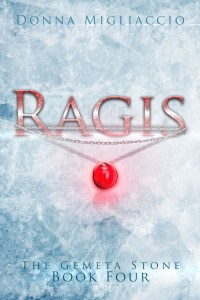 Recall I mentioned an imminent Blog Tour for Ragis? Well, that is coming up this week, and I cannot wait! Tuesday is the big day, so I would love if you could check out that post. If the series is new to you, the reviews on the first three books can be found here:
 A few weeks ago I was nominated for the Mystery Blogger Award. I tried to write my own post in response to this almost straight away… but I actually found it to be quite tricky! I’m going to pick up where I left off and try to finish that post for you!

 Vivienne Vermes is a writer and actress of Irish and Hungarian descent who divides her time between Paris and London. She has published four collections of poetry: Sand Woman, Metamorphoses, Passages and When the World Stops Spinning, and has performed her work in festivals throughout Europe. She is winner of the Piccadilly Poets’ award, the Mail on Sunday’s Best Opening of a Novel competition, as well as Flash 500s prize for short prose and the Paragram national competition for best poem and “petite prose”. She has taught creative writing in universities in Transylvania, and runs a writers’ workshop in Paris.


 Starting on Wednesday, I have a Blog Tour review for Three Bloody Pieces by Elizabeth Davies. This is the first book of three; I am reading the next two books shortly for review at a later date! In the meantime, I would love if you could check out my thoughts on this first book when I post this week.
 Next, I have another Blog Tour on Sunday! This is for The Barefoot Road, the first book I read this week. This is a standalone book that echoes historical fiction in its treatment of ethnic segregation and themes of witchcraft and religion. If you want to read more on that, check out my blog next Sunday.
 So, as I have the Blog Tour scheduled, my Sunday Summary post is going to be slightly late. I’m going to schedule it for first thing Monday morning, so you don’t have to miss out on my weekly update and general musings. I hope to see you around for that!
 The Green Mile was the first book I picked up by Stephen King… and it kindled a real love for his writing. I have since gone on to read Pet Sematary, IT, The Gunslinger (book 1) and listen to The Stand as an audiobook. I have loved each and every one. Obviously The Green Mile is a little different to the majority of his writing. If anything, introducing myself to this author with this book made it easier for me to step into reading horror. It’s a genre I never thought I would like, but I have been proven wrong.
 It would have been criminal not to include J K Rowling on this list. I grew up with the Harry Potter books. They will forever be cemented as a part of my childhood/teen years. I read the last book of the series on holiday as a teenager – I think it was the last year I took physical books on holiday. I must have had four or five books in the suitcase (at least two were hardback; the weight must have been half books). This was the last book I was reading, and it was so good, I physically couldn’t put it down to pack the case to go home.
 Having read and LOVED the first Mistborn trilogy, I went on to read The Way of Kings (The Stormlight Archives). I thought it would be difficult for Sanderson to best those books, but he did. It is taking all my efforts not to binge read the other two books that begin the series. Otherwise, I will be in for a VERY LONG WAIT for the remaining seven.
 I have only read one of Laini Taylor’s books so far. I think it speaks volumes that I read the book outside of my TBR… and very quickly. I’ve also pre-ordered Muse of Nightmares ready for its release in October. Her writing is beautiful, her characters adorable and I just want more! I’ve also added Daughter of Smoke and Bone to the reading list because I loved Strange the Dreamer so much. This book also seems to have a lot of love, so I can’t wait to read this!
 I have become a Discworld nerd… that’s for sure. One of my friends in particular had read Pratchett’s work and raved about him a lot. I didn’t really get into the idea… but I think that is because she usually talked about it to one of her other friends. Let’s just say the friendship isn’t mutual and leave it there.
 I began reading the Sword of Truth series as a teenager, thanks to stumbling across Wizard’s First Rule in the school library. I’ll admit, since leaving school I haven’t really made much further progress with these books. That doesn’t mean I don’t intend to though! I love the characters and the world-building, but most importantly, the writing style. I think I am part way through book 5 of the series. I’ll have to give myself a re-cap and start that one again probably.
 It is one of the rare occasions in which I had watched The Last Kingdom before I discovered it was based on a book series. When unveiling this “grand revelation” to a colleague who I knew had also watched the series… it turned out not to be a revelation to her at all. My disappointment at her knowing this already was short-lived, however, as she loaned me a copy of the book.
 I don’t think I need to go into any particular detail when telling you which books this author is famous for. If you don’t know, then I wonder which rock you have lived under all your life.
 George R. R. Martin has written many works in his time. Most notably is he known for the Song of Ice & Fire series, (aka A Game of Thrones to those not familiar), he developed a lot of his writing skill in producing short stories.
 I cannot tell you how much I love this man’s series, The Kingkiller Chronicles. The narrative is beautiful. He is a master storyteller through and through.


 I’ll be continuing my throwback mini-series on Thursday, with a review of another book or series I have read and am yet to review. I hope you can spare a few moments to join me for that!
 Top 1% in Epic